
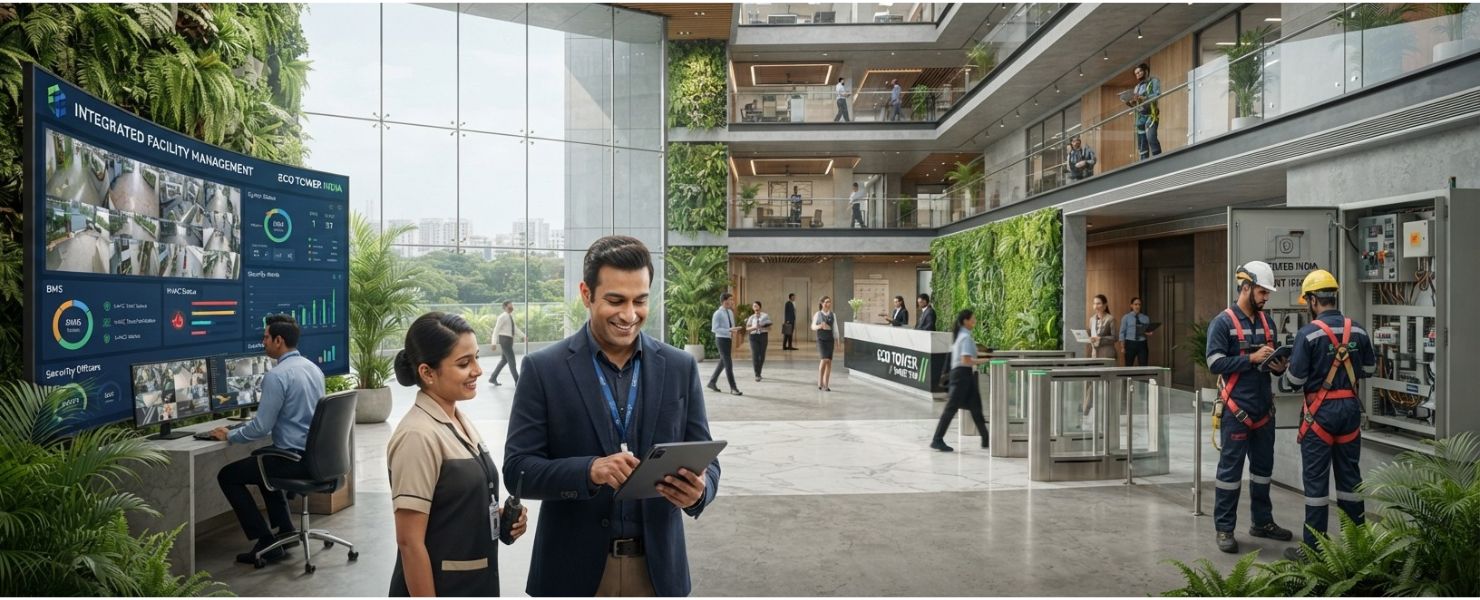
For a time businesses saw facility management services as a necessary cost. The main goal was to maintain buildings manage cleaning ensure security and keep utilities running. Facility management was often viewed as a cost center that supported business operations behind the scenes.
Today this view has changed a lot.
As organizations compete to attract talent improve employee satisfaction and create productive workplaces facility management has become an experience-driven business function. Companies now understand that the quality of the workplace directly impacts employee productivity, customer impressions, operational efficiency and even brand reputation.
Whether it is an office, manufacturing unit, commercial complex, healthcare facility, educational institution or retail space facility management is no longer just about maintenance it is about creating environments where people can perform at their best. Facility management is crucial for businesses.
At Sonip Global Security & Facility Management we believe that modern facility management should deliver business value beyond operational support. By combining security, housekeeping, engineering services, technology and workplace management organizations can create safer, cleaner and more engaging environments that contribute directly to business success. Our goal at Sonip Global is to provide top-notch facility management services.
The Traditional Role of Facility Management
Historically facility management focused on maintaining infrastructure and reducing disruptions. The responsibilities typically included:
Building maintenance
Housekeeping services
mechanical maintenance
Pest control
Waste management
Utility monitoring
Vendor management
Although these services remain essential they were often evaluated solely on operational costs rather than their contribution to business outcomes.
As workplaces evolved organizations began asking a question:
How can facility management improve employee experience while supporting business growth through effective facility management?
That shift has redefined the industry.
The Rise of Experience-Driven Workplaces
workplaces are no longer simply locations where employees complete daily tasks. They have become environments that encourage collaboration, creativity, innovation and employee being.
Employees today expect:
Safe working environments
hygienic spaces
Comfortable workstations
Quick response to maintenance issues
visitor management
Seamless workplace services
Technology-enabled experiences
Every interaction employees have with their workplace influences how they feel about their employer and facility management.
A maintained office creates frustration.
A managed workplace creates confidence.
This is where integrated facility management plays a role in providing great facility management services.
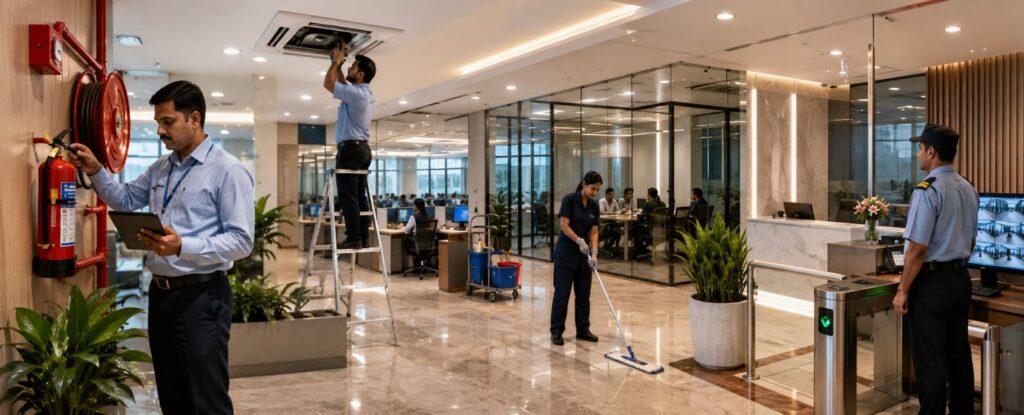
Why Employee Experience Matters More Than
Organizations across industries are competing for skilled talent.
Salary is no longer the deciding factor. Workplace quality has become a part of employee retention and satisfaction.
When facility management delivers workplace experiences businesses often benefit from:
Higher employee productivity
Lower absenteeism
Better workplace safety
Improved employee engagement
employer branding
Increased operational efficiency
Clean meeting rooms functioning air conditioning, reliable security, responsive maintenance teams and organized common areas all contribute to a positive work environment created by good facility management.
Employees notice these details every day.
Facility Management Is Becoming a Strategic Business Function
Business leaders now recognize that facilities directly influence performance.
Of asking:
“How much does facility management cost?”
Companies now ask:
“How much value does facility management create for the business through effective facility management?”
This change has elevated facility management from an operational department to a strategic partner.
Modern facility management solutions now contribute to:
Business Continuity
Unexpected breakdowns can interrupt operations.
Preventive maintenance helps minimize downtime while extending the life of assets.
Employee Productivity
Employees work efficiently when facilities operate smoothly.
Proper lighting, temperatures, clean workspaces and responsive maintenance reduce workplace distractions.
Customer Experience
Clients visiting your office form opinions within minutes.
Professional security personnel, clean reception areas organized meeting spaces and efficient visitor management strengthen brand perception.
Brand Reputation
Every facility reflects the organization behind it.
Maintained premises communicate professionalism, reliability and attention to detail.
Technology Is Transforming Facility Management
Technology has become one of the drivers behind modern facility management.
Organizations are investing in solutions that improve operational visibility and employee experience.
Examples include:
enabled maintenance monitoring
Digital visitor management
Smart surveillance systems
Automated housekeeping schedules
Predictive maintenance software
Energy management systems
Mobile maintenance requests
Real-time reporting dashboards
These innovations enable facility managers to resolve issues before they affect business operations.
Of reacting to problems teams can proactively manage workplace performance with the help of facility management.
Security Is Now Part of Workplace Experience
Security has traditionally focused on protecting assets.
Today it also contributes to employee confidence and workplace comfort.
Professional security and facility management services help organizations deliver:
Trained security personnel
Access control systems
Visitor management
CCTV surveillance
Emergency response planning
Fire safety compliance
Incident reporting
Risk assessment
Employees perform better when they feel secure.
Visitors also appreciate professional entry processes that reflect organizational excellence and good facility management.
Sustainability Is Driving Smarter Facility Management
Environmental responsibility has become a business objective.
Facility management teams now support sustainability initiatives by implementing:
Energy- lighting
Water conservation programs
Waste segregation
Recycling systems
Green cleaning practices
HVAC optimization
Preventive maintenance
Paperless reporting
These initiatives reduce operating costs while supporting corporate sustainability goals.
Businesses benefit from utility expenses while improving their environmental impact through effective facility management.
Integrated Facility Management Creates Better Business Outcomes
than managing multiple vendors separately organizations increasingly prefer Integrated Facility Management (IFM).
IFM combines multiple workplace services under one partner creating greater efficiency and accountability.
Typical integrated services include:
Security services
Housekeeping
Engineering maintenance
Pantry management
Landscaping
Pest control
Waste management
office management
Support
Compliance management
This integrated approach simplifies vendor coordination while improving service consistency in facility management.
Measuring Success Beyond Cost Savings
Modern facility management performance is measured through experience-focused metrics than cost reduction alone.
Organizations evaluate success based on:
Employee satisfaction
Workplace cleanliness scores
Asset uptime
Response time
Visitor feedback
Energy efficiency
Safety compliance
Productivity improvements
These indicators provide an accurate picture of facility performance and its impact on business growth through effective facility management.
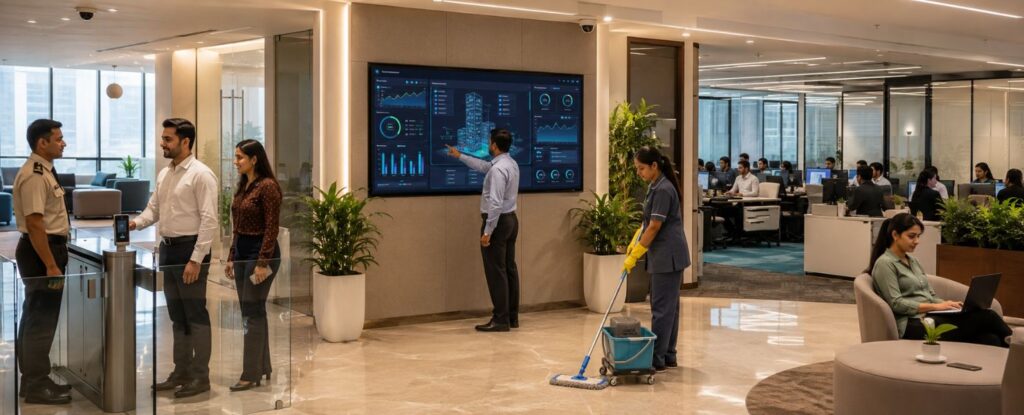
The Future of Facility Management
As workplaces continue to evolve facility management will become more experience-focused.
Emerging trends include:
powered predictive maintenance
Smart workplace automation
Robotics for cleaning
Digital workplace analytics
Contactless access systems
Occupancy tracking
Sustainability dashboards
Integrated workplace apps
Organizations that embrace these innovations will be better positioned to deliver exceptional workplace experiences while optimizing operational efficiency with the help of facility management.
Why Choose Sonip Global Security & Facility Management?
At Sonip Global Security & Facility Management we understand that every workplace is unique. Our approach goes beyond maintenance to deliver integrated solutions that support business continuity employee well-being and operational excellence through effective facility management.
Our services include:
Housekeeping Services
Technical & Engineering Maintenance
Corporate Facility Solutions
Industrial Facility Management
Hospitality Support Services
Cleaning & Hygiene Management
Visitor & Front Office Management
Compliance & Safety Management
With trained professionals technology-enabled operations and a commitment to service excellence we help organizations create workplaces that employees enjoy and businesses trust.
Conclusion
Facility management has undergone a transformation.
What was once viewed as a support function focused on reducing costs has become a driver of workplace experience, employee satisfaction, operational efficiency and business growth through effective facility management.
Todays organizations recognize that exceptional workplaces don’t happen by chance—they are built through maintenance, integrated services, smart technology, strong security and a people-first approach.
By partnering with a facility management company like Sonip Global Security & Facility Management businesses can move beyond basic maintenance and create environments that inspire productivity strengthen brand reputation and support long-term success.
The future of facility management is no longer about managing buildings—it is about creating experiences that help businesses and people thrive through facility management.
Frequently Asked Questions (FAQs)
1. What is facility management?
Facility management is the management of buildings, infrastructure, people and support services to ensure workplaces remain safe, efficient and productive with effective facility management.
2. Why is facility management important for businesses?
It improves workplace safety, employee productivity, operational efficiency, customer experience, asset performance and business continuity while reducing term operational risks through good facility management.
3. What is Integrated Facility Management (IFM)?
Integrated Facility Management combines multiple workplace services—such as security, housekeeping, engineering maintenance, pest control and front office operations—under a service provider for better efficiency and accountability in facility management.
4. How does facility management improve employee experience?
By maintaining secure, comfortable and well-managed workplaces facility management creates an environment where employees can work efficiently collaborate effectively and feel valued through effective facility management.
5. How does technology improve facility management?
Technology enables maintenance, smart surveillance, digital visitor management, energy monitoring, automated reporting and faster response to maintenance issues improving both efficiency and workplace experience in facility management.
6. Which industries benefit from facility management services?
Corporate offices, IT parks, manufacturing plants, healthcare facilities, educational institutions, retail spaces, logistics centers, hotels, commercial buildings and residential communities all benefit from facility management.
7. Why choose Sonip Global Security & Facility Management?
Sonip Global offers security and facility management solutions with trained professionals, technology-driven operations customized service plans and a strong commitment to workplace safety, efficiency and exceptional customer experience, through effective facility management.
