
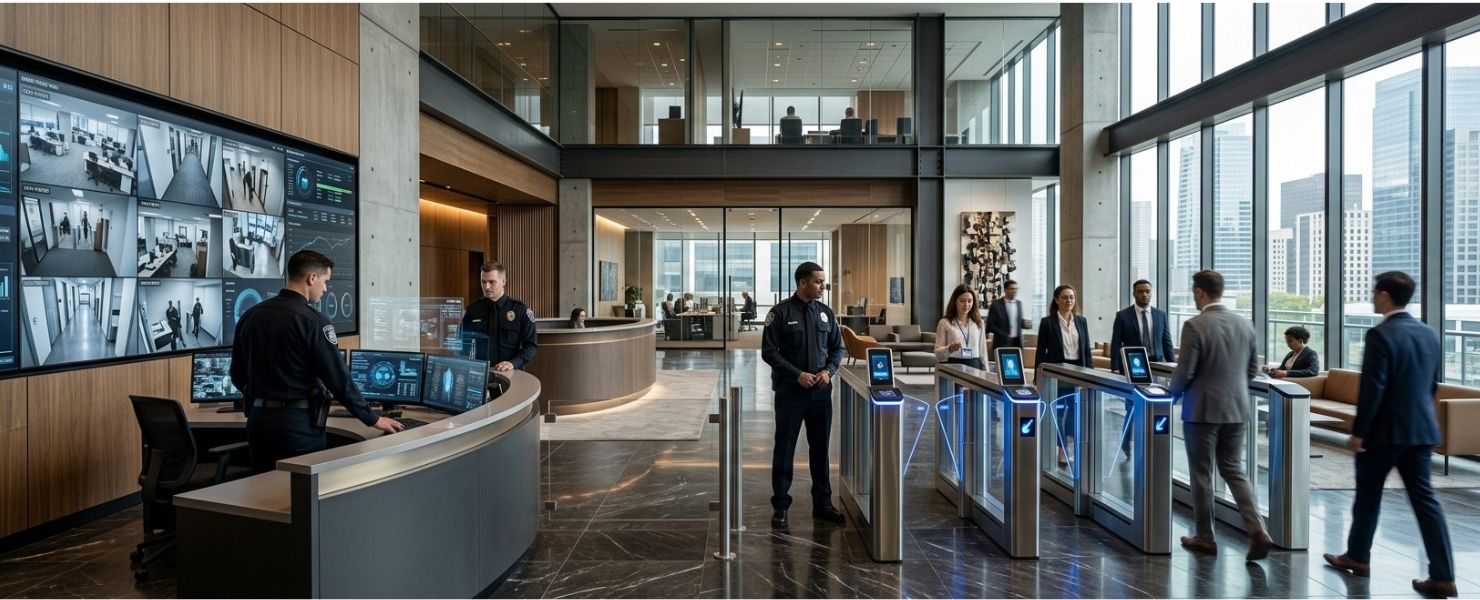
Workplace safety is something that people think about after something bad happens. For example, if there is a security breach or someone gets hurt, then the security team jumps into action. This way of doing things has helped companies deal with problems away. Now companies are realizing that it is better to prevent problems from happening in the first place.
Today companies are changing the way they think about security. They are moving away from reacting to problems and towards preventing them from happening. This is because the workplace is getting more complicated and companies need to be safer.
Modern workplace security is not about having security guards at the door. It involves using technology, training security professionals, and keeping an eye on things all the time.
At SONIP Global Security & Facility Management, we help companies change the way they do security. We help them move from reacting to problems to preventing them from happening in the first place.
Understanding Reactive Security Management
For a time workplace security was just about responding to problems. Security teams would only act when something bad happened. This could be someone getting into the building who should not be there, something being stolen, or an employee getting hurt.
The problem with this way of doing things is that it can leave companies open to risks. For example, if a company only finds out about a security breach after it has happened, then the damage is already done.
Traditional security models focus on:
Responding to problems after they happen
Watching things manually
Not looking hard for risks
Only thinking about short-term solutions
Making decisions based on what has happened
While it is still important to respond quickly to problems, companies need a better plan that focuses on preventing them from happening.
Why Businesses Are Shifting Towards Risk Prevention
The workplace is getting more complicated. Companies have locations, lots of employees, and use advanced technology. This means that companies need to be more proactive about security.
A preventive security approach helps companies understand where they might be vulnerable and take steps to reduce risks.
For businesses, workplace safety is not about protecting things. It is also about:
Keeping employees safe and confident
Making sure the business can keep running
Protecting the company’s reputation
Following rules and regulations
Keeping customers safe
Running things smoothly
Companies that invest in security and facility management services can control their workplace better and make it safer for everyone.
What Is Risk Prevention in Workplace Security?
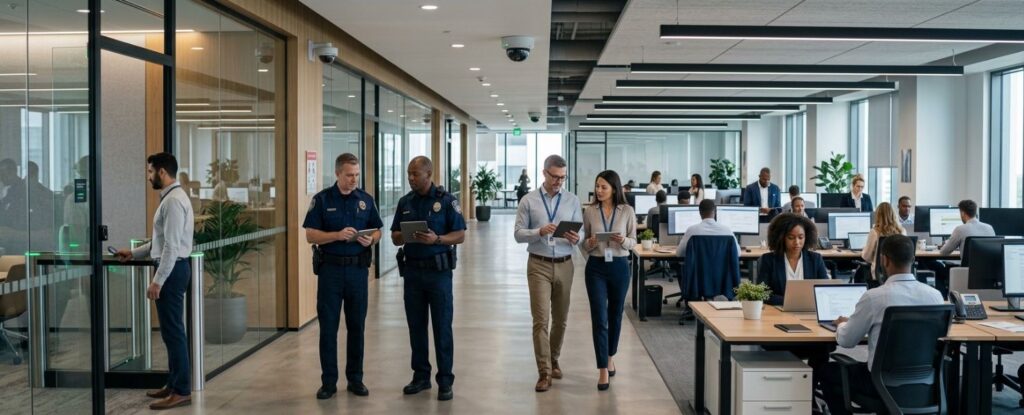
Risk prevention is a way of doing security that focuses on finding and fixing problems before they happen. This approach uses a combination of people, technology, and data to create a workplace.
A modern workplace safety strategy includes:
Regular security checks
Advanced surveillance systems
Controlling who can get into the building
Planning for emergencies
Training security personnel
Teaching people about safety
Taking care of the building to prevent problems
Through this approach, companies can find problems early and fix them before they happen.
The Role of Technology in Preventive Workplace Security
Technology is playing a role in changing workplace security. Advanced security tools allow companies to watch things in time, find unusual patterns, and respond faster.
Companies are using technologies such as:
CCTV cameras
AI-based monitoring systems
Systems to manage visitors
Biometric access control
Alarm systems
Digital reporting platforms
These technologies give security teams the information they need to make decisions.
However, technology alone is not enough to create a workplace. Companies need a combination of tools and trained security professionals to create an effective security system.
At SONIP Global Security & Facility Management, we combine technology with security professionals to deliver reliable workplace protection.
Moving Beyond Security Guards: The Evolution of Security Services
The role of security professionals is changing. They are not just guards anymore. They also help identify risks, manage emergencies, and improve workplace safety.
Modern security professionals are trained to:
Find activities
Manage emergency situations
Keep employees safe
Control who can get into the building
Write incident reports
Work with management teams
This change has transformed security services from a basic protection function to a strategic business support system.
Companies are choosing integrated solutions that combine security services, technology, and facility management to get workplace protection.
How Facility Management Supports Preventive Security
Security and facility management are connected. A maintained workplace is a safer workplace.
Preventive facility management focuses on finding maintenance issues before they become problems.
For example, regular inspections can find risks before something breaks. Good housekeeping practices can prevent accidents. Efficient building management systems can improve safety and productivity.
Integrated facility management services help companies maintain efficient and productive workplaces.
SONIP Global provides solutions including security management, housekeeping, cleaning, maintenance support, and integrated facility solutions.
Benefits of a Preventive Workplace Safety Approach
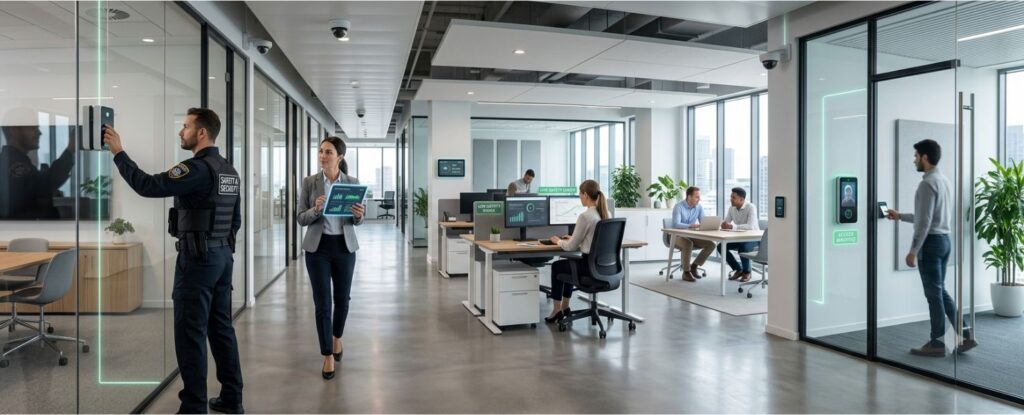
A security strategy has many advantages for companies.
It helps companies identify and manage risks
It keeps employees safe and confident
It reduces disruptions and losses
It helps companies prepare for emergencies
It protects the company’s reputation
Building the Future of Workplace Safety with SONIP Global
The future of security management is about prevention, intelligence, and integration. Companies cannot just rely on security methods anymore. They need solutions that anticipate risks and create environments.
At SONIP Global Security & Facility Management, we understand that every workplace is different. Our approach combines professionals, advanced technology, and customized strategies to deliver reliable protection.
We support companies with end-to-end security and facility management solutions.
Our services include:
Security services
Advanced security solutions
CCTV surveillance management
Integrated facility management
Housekeeping and cleaning services
Workplace safety solutions
Security planning
By moving from reactive responses to proactive prevention, companies can create workplaces that are safer, smarter, and better prepared for the future.
Conclusion
Workplace security is changing. The focus is shifting from responding to problems after they happen to preventing them from happening in the place.
A proactive security strategy helps companies protect employees, assets, and operations while improving workplace efficiency.
As security challenges continue to evolve, companies must partner with security and facility management providers who understand the importance of prevention.
With the combination of technology, expertise, and strategic planning, companies can move towards a safer and more resilient future.
SONIP Global Security & Facility Management helps companies build workplaces through integrated security solutions and preventive risk management strategies.
Frequently Asked Questions (FAQs)
1. What is the difference between security and preventive security?
Reactive security focuses on responding to problems after they happen, while preventive security focuses on finding and fixing problems before they happen.
2. Why is preventive security important for workplaces?
Preventive security helps companies reduce risks, keep employees safe, protect assets, and maintain operations.
3. How can companies improve security?
Companies can improve security by doing regular risk assessments, using advanced technology solutions, training security personnel, and partnering with professional security service providers.
4. What services does SONIP Global Security & Facility Management provide?
SONIP Global provides solutions including security services, facility management, housekeeping, cleaning, surveillance support, and customized workplace safety solutions.
5. How does technology improve security?
Technology such as CCTV cameras, access control systems, and AI-based security solutions helps companies detect risks faster and respond better.
6. Can preventive security reduce business costs?
Yes, preventive security can reduce disruptions, asset losses, and emergency expenses by identifying and fixing potential problems before they happen.
