
Introduction
In today’s commercial real estate market, office security is about much more than protecting people and property. It also plays an important role in improving tenant confidence, supporting business continuity, and making commercial spaces more attractive to potential occupants. For landlords, a secure and well-managed office building can strengthen its market appeal. For tenants, effective security measures create a safer working environment and help protect employees, equipment, confidential information, and daily business operations.
As businesses become more conscious of workplace safety and operational risks, investing in the right office security upgrades that increase property value can help landlords and tenants make better long-term decisions. Modern security systems, trained security personnel, and reliable facility management services can improve how a property functions and how it is perceived by businesses looking for office space.
However, security upgrades do not automatically guarantee a higher property valuation or rental income. Their impact depends on the building’s location, existing infrastructure, tenant requirements, quality of implementation, and ongoing maintenance.
Here are ten important office security upgrades that can improve property appeal, strengthen workplace safety, and support long-term commercial property value.
1. Install Modern CCTV Surveillance Systems
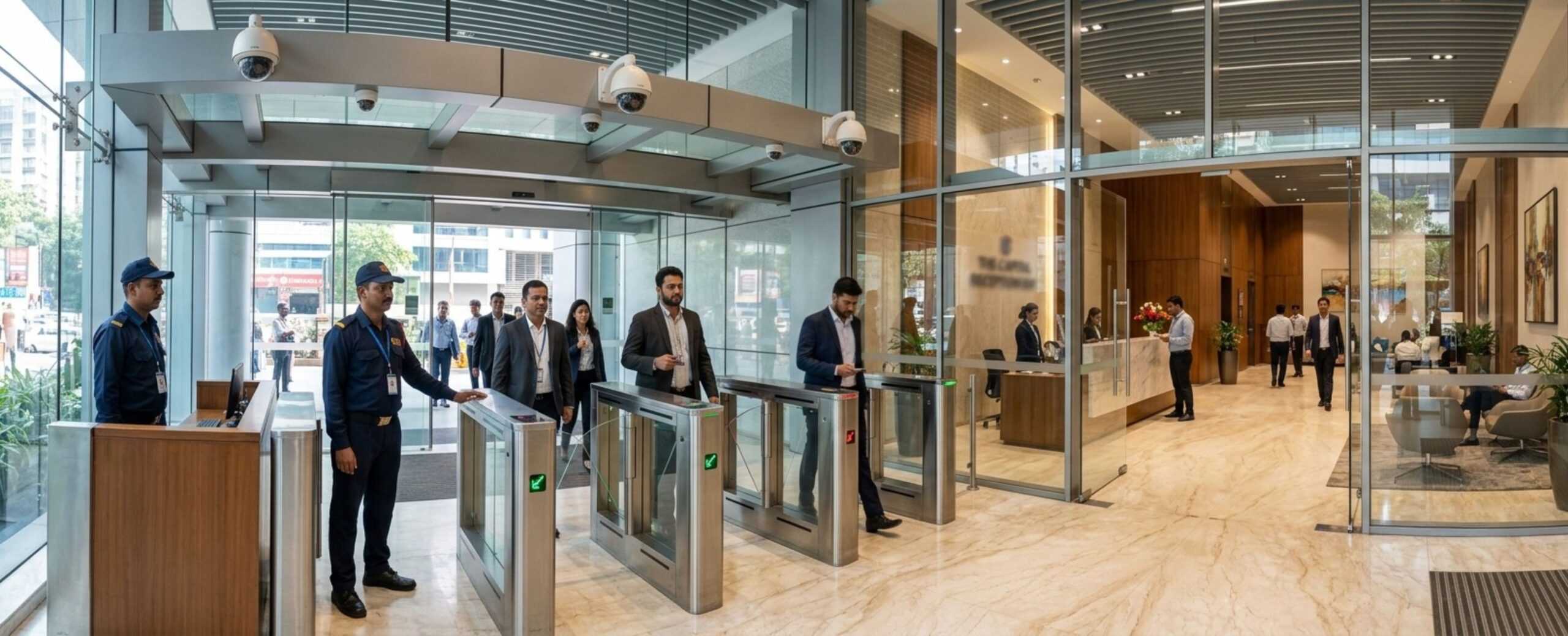
CCTV surveillance is one of the most important investments for commercial office buildings. Strategically positioned cameras help monitor entrances, reception areas, lifts, corridors, parking zones, loading areas, and other shared spaces. They can discourage unauthorised activity and provide useful footage when an incident needs to be investigated.
Modern IP cameras and centralised monitoring systems can offer clearer images, remote viewing, and better integration with other security measures. Landlords can use these systems to strengthen building-wide security, while tenants can protect sensitive areas such as server rooms, storage spaces, and restricted office zones.
A properly planned CCTV system can also improve tenant confidence by demonstrating that the property is managed with attention to safety. Regular maintenance, appropriate footage retention, restricted access to recordings, and clear privacy policies are essential to making the system effective.
2. Upgrade to Electronic Access Control Systems
Traditional keys can be difficult to manage in buildings with multiple tenants, frequent employee changes, and restricted work areas. Electronic access control systems provide a more organised way to manage who can enter specific parts of a property.
Depending on the building’s requirements, these systems may use access cards, PINs, mobile credentials, or biometric verification. Permissions can be assigned according to employee roles, working hours, and designated areas. Access rights can also be updated when employees leave or responsibilities change.
For landlords, access control can improve the management of common entrances and shared facilities. Tenants benefit from better control over their individual office spaces and sensitive business areas.
When implemented correctly, office security systems such as electronic access control can make commercial premises more attractive to organisations that value controlled entry, accountability, and professional workplace management.
3. Introduce Digital Visitor Management
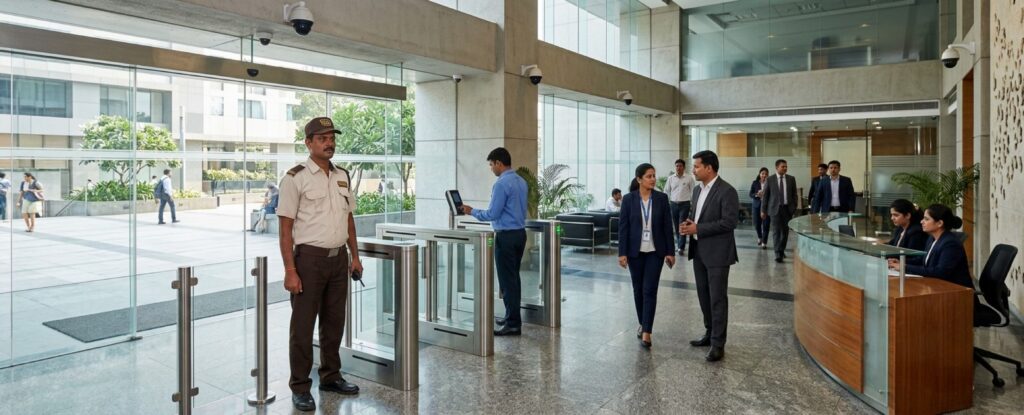
Visitors, delivery personnel, contractors, interview candidates, and business partners enter offices every day. Without a consistent visitor management process, reception teams may struggle to verify identities, notify employees, and maintain accurate entry records.
A digital visitor management system helps streamline these activities. Visitors can be registered, their hosts notified, and entry and exit details recorded. Depending on the system, businesses may also introduce pre-registration, digital visitor passes, and appointment-based access.
For landlords, this upgrade can improve the visitor experience across shared reception areas. For tenants, it helps create a more controlled environment without making the arrival process unnecessarily complicated.
A well-organised visitor management system also supports better coordination between reception teams, security personnel, and facility managers. It is particularly useful for multi-tenant commercial buildings where different organisations operate under one roof.
4. Strengthen Fire Detection and Emergency Response Systems
Security is incomplete without effective fire protection and emergency preparedness. Smoke detectors, fire alarms, emergency lighting, clearly marked evacuation routes, and suitable fire safety equipment are essential elements of a safe commercial property.
Landlords should ensure that building-level fire safety systems are appropriately installed, inspected, and maintained. Tenants should understand evacuation procedures, emergency contacts, and their responsibilities during an incident. Regular drills and staff training can help everyone respond more confidently during an emergency.
Security upgrades must also work alongside fire safety systems. For example, electronically controlled doors and access barriers on escape routes must not prevent people from evacuating safely. Such installations should be designed and tested by qualified professionals in accordance with applicable building and fire safety requirements.
Effective emergency preparedness can protect lives, reduce avoidable disruption, and support tenant confidence. It also demonstrates that the property is being managed responsibly.
5. Improve Parking and Entry Gate Security
Parking areas and vehicle entry points are often overlooked when planning office security. However, these spaces are important because employees, visitors, contractors, and delivery vehicles regularly move through them.
Landlords can consider CCTV coverage, controlled entry barriers, visitor parking procedures, adequate lighting, and clear vehicle movement signs. Larger properties may benefit from digital vehicle registration or number plate recognition, depending on their operational requirements.
These measures help security personnel monitor vehicle movement and manage access more efficiently. Clear parking rules can also reduce confusion, unauthorised parking, and conflicts between tenants.
For tenants, secure and organised parking can improve the daily workplace experience. For landlords, a professionally managed parking area can strengthen the overall perception of the building.
The best solution depends on the property’s size, traffic patterns, number of occupants, and existing infrastructure. Security planning should also preserve accessible routes and unobstructed emergency vehicle access.
6. Secure Server Rooms and Sensitive Business Areas
Modern offices often contain valuable equipment, confidential documents, networking infrastructure, financial records, and business-critical information. Protecting these areas requires more than general entrance security.
Landlords and tenants should identify restricted zones such as server rooms, IT infrastructure areas, records storage, finance departments, and rooms containing critical building systems. Access should be limited to authorised personnel, with suitable monitoring and clear procedures for contractors and maintenance teams.
Electronic access logs, dedicated access permissions, and CCTV coverage at appropriate locations can strengthen accountability. Organisations handling sensitive information should also coordinate physical security with their IT and information security policies.
For landlords, protecting shared technical infrastructure helps maintain building operations. For tenants, it reduces the risk of unauthorised physical access to valuable assets and confidential information.
A layered security approach is particularly important in buildings occupied by several businesses, where different tenants may have different access requirements.
7. Improve Security Lighting Across the Property
Poor lighting can create avoidable security concerns in parking areas, stairwells, corridors, building perimeters, service entrances, and other spaces used outside regular office hours.
A lighting assessment can identify dark spots and areas where visibility needs improvement. Energy-efficient LED lighting, motion-activated lights in suitable locations, and consistent illumination along access routes can make these spaces easier to monitor.
Good lighting supports security personnel during patrols and can improve the visibility of CCTV footage. It also makes employees and visitors feel more comfortable when arriving early, leaving late, or using parking facilities after business hours.
Landlords benefit from better-maintained common areas, while tenants gain a more reassuring workplace environment.
Lighting should be planned carefully to avoid glare, excessive brightness, unnecessary energy consumption, and disturbance to neighbouring properties. Regular inspection is equally important because damaged or non-functional lights can reduce the effectiveness of the entire security arrangement.
8. Deploy Trained Security Personnel and Regular Patrols
Technology is an important part of office security, but it cannot replace trained personnel who can assess situations, communicate with people, and respond to unexpected incidents.
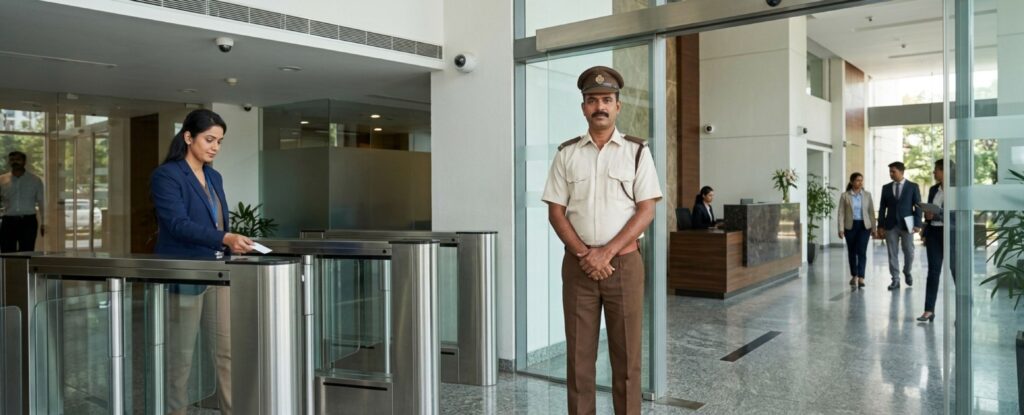
Professional security personnel can manage reception and entry points, verify visitors, monitor suspicious activity, support emergency procedures, and conduct scheduled patrols. Their responsibilities should be clearly defined according to the property’s risks and operational needs.
Landlords can benefit from consistent security coverage across shared facilities, while tenants gain confidence that concerns will be addressed through established procedures. Security teams can also coordinate with housekeeping, maintenance, and building management to report hazards and operational issues.
Regular training, supervision, incident reporting, and clear escalation procedures help maintain service quality. Where applicable, landlords and businesses should verify that their security service provider meets relevant licensing and statutory requirements.
Choosing professional security and facility management services can help property owners coordinate people, processes, and technology under a more structured approach.
9. Add Intrusion Detection and After-Hours Monitoring
Office buildings may remain partially or completely unoccupied during nights, weekends, and public holidays. These periods require suitable security arrangements, particularly when the premises contain valuable equipment or sensitive information.
Intrusion detection systems can identify unauthorised entry through selected doors, windows, or restricted zones. Depending on the system, alerts may be sent to designated security personnel or a monitoring team. Integration with CCTV and access control can help responders assess an alert more effectively.
Landlords should consider building-wide risks, including service areas and common entrances. Tenants should review the security of their individual premises, especially rooms containing valuable equipment or confidential records.
After-hours procedures should specify who receives alerts, who is authorised to enter, and how incidents are escalated. Backup power and routine system testing may also be necessary, depending on the installation.
These measures can reduce gaps in security coverage and help businesses maintain confidence in the protection of their workplace beyond standard operating hours.
10. Integrate Security with Professional Facility Management
Security systems deliver better results when they are supported by regular maintenance, clear responsibilities, trained personnel, and effective coordination. A camera that is not working, a faulty access reader, or an unmonitored alarm can create gaps in an otherwise well-planned security setup.
Integrated facility management helps coordinate security operations with housekeeping, technical maintenance, building inspections, and emergency preparedness. Regular checks can identify equipment faults, damaged access points, lighting issues, and other concerns before they become larger operational problems.
Landlords benefit from more consistent building management and a clearer understanding of maintenance requirements. Tenants benefit from a workplace where security and essential support services work together instead of operating in separate silos.
Professional facility management services can also support documentation, scheduled inspections, incident reporting, and service performance reviews. This approach helps property stakeholders evaluate whether their investment is delivering practical improvements.
For commercial buildings seeking to attract and retain tenants, reliable facility management can strengthen the overall occupancy experience. When combined with appropriate security measures, it can support the property’s reputation as a well-maintained and business-ready workplace.
How Office Security Upgrades Benefit Landlords and Tenants
The value of security improvements goes beyond the equipment installed. Their real benefit comes from how effectively they protect people and assets, support daily operations, and improve the experience of occupying a commercial property.
For landlords, well-planned upgrades can help differentiate a building, demonstrate responsible management, and support tenant retention. A property with reliable security infrastructure may also be better positioned to meet the requirements of businesses that prioritise workplace safety and operational continuity.
For tenants, effective security can reduce exposure to certain risks, improve access management, protect business equipment, and create a more comfortable environment for employees and visitors. Clear security procedures can also make it easier to manage contractors, deliveries, and after-hours access.
However, property owners should assess each upgrade according to actual risks, building conditions, tenant needs, installation costs, and ongoing operating expenses. Security should be treated as a long-term management priority rather than a one-time installation.
Conclusion
Investing in the right office security upgrades that increase property value can help landlords and tenants create safer, more reliable, and professionally managed workplaces. From CCTV surveillance and electronic access control to emergency preparedness and integrated facility management, each improvement contributes to a stronger overall security strategy.
The most effective approach combines suitable technology, trained security personnel, regular maintenance, and clearly defined responsibilities. Landlords should assess the building as a whole, while tenants should identify the specific risks associated with their workspaces and business operations.
SONIP Global Security & Facility Management supports businesses and property stakeholders with security and facility management solutions designed to help maintain safe, clean, and efficiently managed environments.
Explore our security and facility management services to understand how a coordinated approach can support your workplace and commercial property requirements.
Frequently Asked Questions (FAQs)
1. Which office security upgrades can help increase commercial property value?
CCTV surveillance, electronic access control, digital visitor management, fire safety systems, secure parking, improved lighting, intrusion detection, and professional security personnel are common upgrades. Their impact depends on property condition, tenant demand, implementation quality, and maintenance.
2. Does office security increase rental value?
Improved security may strengthen a property’s appeal to prospective tenants and support rental competitiveness. However, higher rent is not guaranteed. Location, market conditions, building quality, available amenities, and tenant demand also influence rental value.
3. What is the most important security system for an office?
There is no single system suitable for every office. CCTV and access control are useful foundations, but the right combination depends on the building’s size, occupancy, business activities, existing infrastructure, and risk assessment.
4. How does access control benefit commercial property owners?
Access control helps manage entry permissions, restrict sensitive areas, and maintain records of access events. It can improve accountability and make it easier to manage access across shared facilities and individual tenant spaces.
5. Why is professional facility management important for office security?
Professional facility management helps coordinate security personnel, equipment maintenance, inspections, incident reporting, and emergency procedures. This can reduce operational gaps and help maintain consistent service quality.
6. How often should office security systems be inspected?
Inspection frequency depends on the equipment, manufacturer recommendations, applicable regulations, and the property’s risk profile. Routine operational checks and scheduled professional maintenance help identify faults and maintain system reliability.
7. Should landlords or tenants pay for office security upgrades?
Responsibility depends on the lease agreement, ownership of the equipment, the building’s shared facilities, and applicable legal obligations. Landlords typically coordinate common-area infrastructure, while tenants may manage additional security inside their premises. Responsibilities should be agreed upon clearly.
8. Can small offices benefit from security upgrades?
Yes. Smaller offices can benefit from suitable CCTV coverage, controlled entry, visitor records, secure storage, emergency planning, and reliable locking systems. The solution should match the office’s size, budget, and operational risks rather than rely on unnecessary equipment.
9. What should businesses look for in a security and facility management provider?
Businesses should assess relevant experience, applicable licences and compliance, staff training, supervision, service coverage, incident response procedures, maintenance practices, reporting standards, and the provider’s ability to coordinate security with other facility services.
10. How can SONIP Global Security & Facility Management help?
SONIP Global Security & Facility Management provides security and facility management solutions to support safer, cleaner, and better-managed workplaces. Businesses can visit sonipglobal.com to explore the company’s services and discuss their requirements.
