
Introduction
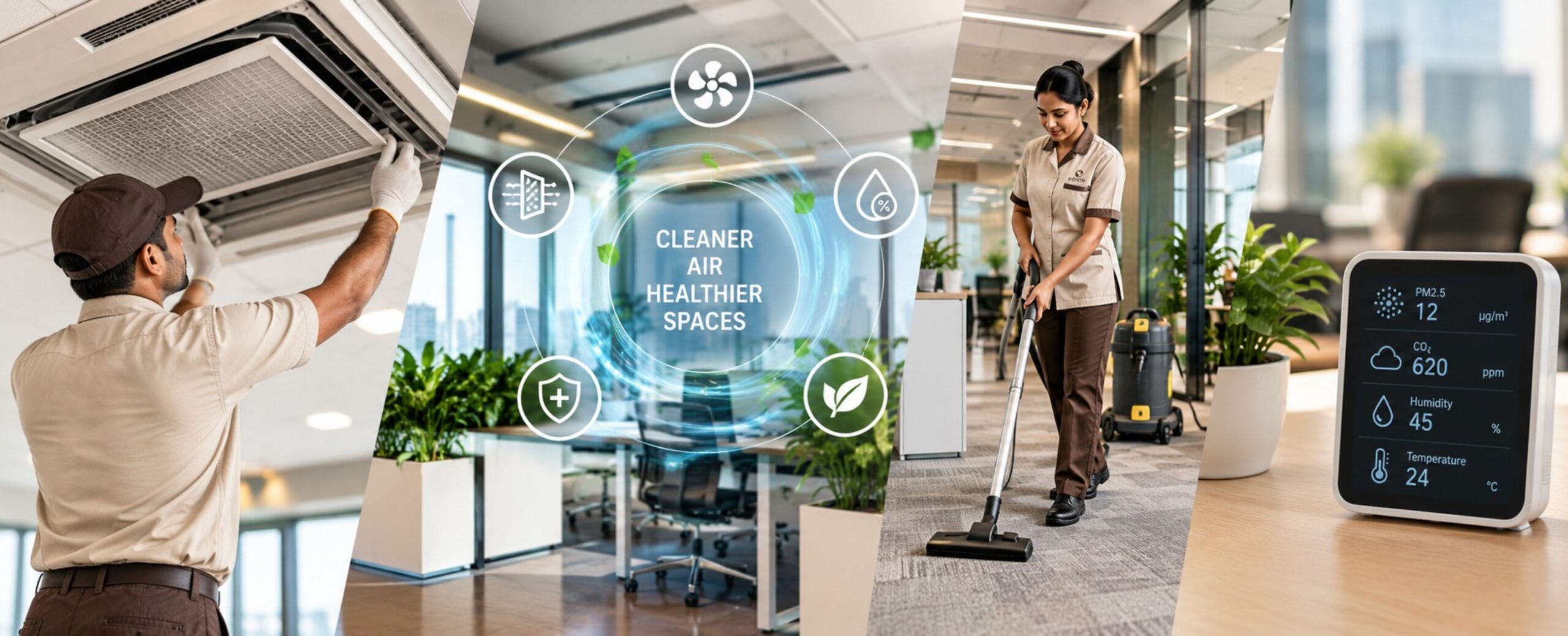
Indoor air quality plays an important role in creating a healthy, comfortable, and productive working environment. Employees spend a significant part of their day inside offices, commercial buildings, shopping centres, hospitals, educational institutions, and other indoor spaces. When the air inside these buildings contains dust, allergens, chemical pollutants, excess moisture, or other contaminants, it can affect employee comfort, concentration, and overall well-being. This makes indoor air quality an important consideration for every business and property manager.
Many organisations focus on office interiors, lighting, furniture, and temperature control when planning workplace improvements. However, indoor air quality deserves equal attention. A clean-looking office does not always have clean air. Dust can accumulate inside air-conditioning systems, poorly maintained ventilation equipment can circulate contaminants, and moisture can encourage mould growth in hidden areas.
This is where professional facility management becomes essential. Through regular HVAC maintenance, effective housekeeping, ventilation management, moisture control, and systematic monitoring, businesses can improve indoor air quality and maintain healthier indoor environments.
For organisations looking to create better workplaces, improving indoor air quality through facility management is not just about cleaning a space. It involves maintaining building systems, identifying potential pollution sources, and implementing preventive measures that support long-term indoor environmental quality.
What Is Indoor Air Quality and Why Does It Matter?
Indoor air quality refers to the condition of the air inside a building and how it affects the health, comfort, and well-being of its occupants. It is influenced by several factors, including ventilation, temperature, humidity, cleaning practices, building materials, outdoor pollution, and the maintenance of air-conditioning systems.
In commercial buildings, indoor air pollutants may include fine dust particles, pollen, cleaning product fumes, volatile organic compounds (VOCs), carbon dioxide from human occupancy, and biological contaminants such as mould spores. Outdoor pollution can also enter through doors, windows, and ventilation systems.
Poor indoor air quality may contribute to symptoms such as headaches, irritation of the eyes or throat, coughing, fatigue, and difficulty concentrating. The effects vary depending on the pollutant, exposure level, duration, and individual sensitivity.
For businesses, maintaining good indoor air quality can support employee comfort, workplace satisfaction, and a better overall working environment. It can also help facility teams identify maintenance issues before they develop into more significant problems.
A well-managed building should therefore treat indoor air quality as an ongoing facility management responsibility rather than a one-time cleaning activity.
How Facility Management Improves Indoor Air Quality
Facility management brings together building maintenance, housekeeping, ventilation, hygiene, and monitoring to maintain safe and comfortable indoor spaces. Instead of addressing air quality concerns only when complaints arise, a structured facility management programme focuses on prevention, regular inspections, and timely corrective action.
Professional facility management teams can assess building conditions, maintain essential equipment, coordinate cleaning activities, and identify potential sources of indoor pollution. These activities help businesses maintain consistent indoor environmental standards across offices, commercial properties, and shared facilities.
1. Regular HVAC System Maintenance
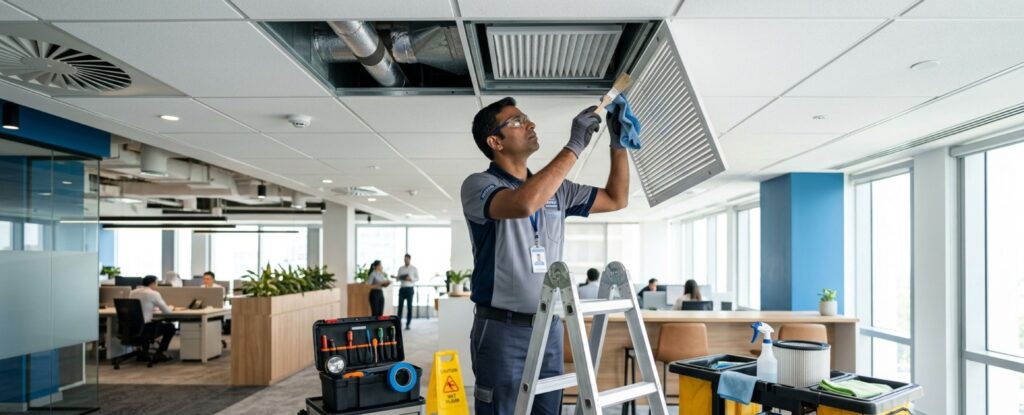
Heating, ventilation, and air-conditioning systems play a major role in maintaining indoor air quality. These systems help regulate temperature, manage airflow, and, depending on their design, introduce outdoor air into occupied spaces.
When HVAC systems are poorly maintained, dust and debris can accumulate in filters, coils, drain pans, and other components. Blocked filters can restrict airflow, while drainage problems may contribute to excess moisture and microbial growth.
Regular HVAC maintenance helps prevent these issues. Facility management teams should follow manufacturer recommendations and building-specific maintenance schedules to inspect filters, clean relevant components, check drainage systems, and verify that equipment operates correctly.
Air filters should be replaced or cleaned according to their specifications and actual operating conditions. Upgrading to more efficient filtration may also be beneficial when the HVAC system can accommodate the required filter without compromising airflow.
Professional maintenance helps keep ventilation systems functioning effectively and reduces the risk of preventable indoor air quality problems.
2. Improving Ventilation and Fresh Air Circulation
Adequate ventilation is essential for maintaining good indoor air quality. It helps dilute indoor-generated pollutants and remove stale air from occupied areas. However, ventilation requirements differ depending on building design, occupancy, activities, and applicable standards.
In offices with meeting rooms, conference areas, and densely occupied workstations, insufficient outdoor air supply can allow indoor-generated pollutants to accumulate. Employees may notice stuffiness, unpleasant odours, or discomfort when ventilation is inadequate.
Facility managers should inspect ventilation equipment, check outdoor air intakes, and ensure that air distribution systems operate as intended. They should also assess whether ventilation is appropriate for the number of people using a space.
In polluted urban environments, introducing outdoor air without suitable filtration may bring additional contaminants inside. Therefore, ventilation improvements should consider outdoor pollution levels, filtration capabilities, and the building’s HVAC design.
A professional facility management team can coordinate these requirements to support effective air circulation without unnecessarily increasing energy consumption.
3. Maintaining High Standards of Housekeeping
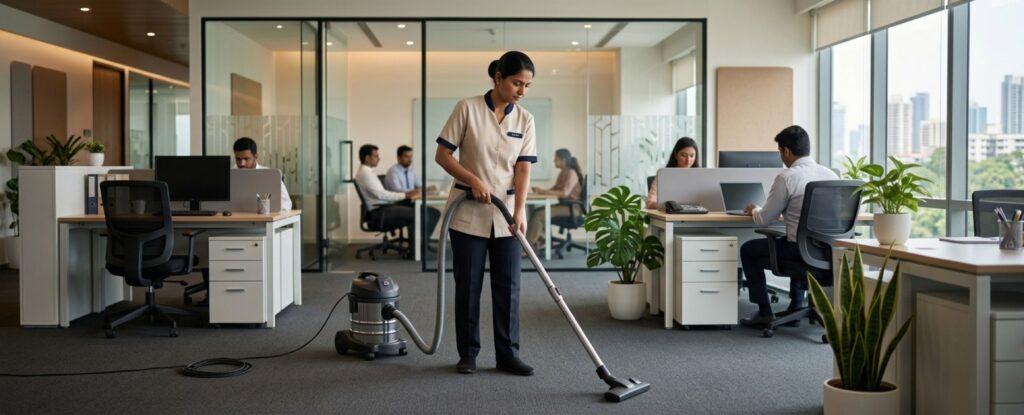
Dust, dirt, and accumulated debris can become sources of airborne particles, especially when disturbed during cleaning or everyday activities. Effective housekeeping is therefore an important part of indoor air quality management.
Routine cleaning should cover floors, workstations, furniture, carpets, reception areas, meeting rooms, pantries, and other frequently used spaces. Particular attention should be given to corners, upholstery, ceiling vents, and areas that are difficult to access.
Using suitable cleaning equipment, including high-efficiency particulate air (HEPA) vacuum cleaners where appropriate, can help reduce the redistribution of fine particles. Damp dusting and carefully managed cleaning practices can also prevent settled dust from becoming airborne.
Cleaning products should be selected carefully because some products release volatile organic compounds or strong fragrances. Facility teams should follow product instructions, avoid unnecessary chemical use, and provide appropriate ventilation during and after cleaning.
For businesses, professional housekeeping services offer a structured approach to maintaining cleanliness while helping control indoor dust and other potential contaminants.
4. Controlling Indoor Humidity and Preventing Mould Growth
Moisture management is another important factor in maintaining healthy indoor environments. Excess humidity, water leaks, condensation, and damp materials can encourage mould growth. Mould may release spores and other substances that can affect sensitive occupants.
Commercial buildings can develop moisture problems around air-conditioning units, plumbing systems, washrooms, pantry areas, windows, basements, and poorly ventilated storage rooms.
Facility management teams should regularly inspect these locations for leaks, damp patches, condensation, and musty odours. Any water intrusion should be addressed promptly, and wet materials should be dried appropriately.
Indoor relative humidity is commonly maintained within a moderate range, often around 30% to 50% where practical, although suitable levels depend on climate, building design, and operating conditions. In humid regions, including Mumbai and Navi Mumbai, humidity management requires particular attention because moisture can accumulate quickly.
Air-conditioning equipment, dehumidification systems, drainage lines, and ventilation controls should be maintained to support appropriate humidity levels.
Simply covering mould or applying fragrance is not an effective solution. The underlying moisture source must be identified and corrected to prevent recurrence.
5. Using Safe Cleaning Products and Managing Chemicals
Cleaning chemicals, paints, adhesives, air fresheners, furniture materials, and other products can release airborne compounds. Some of these substances may contribute to unpleasant odours, irritation, or poor indoor air quality.
Facility managers can reduce unnecessary exposure by selecting suitable low-emission products, following safety instructions, and storing chemicals in designated, well-managed areas.
Cleaning staff should receive training on dilution, handling, storage, and disposal procedures. Chemicals should never be mixed unless the product instructions explicitly permit it, as certain combinations can produce hazardous gases.
Where maintenance work involves painting, polishing, adhesive application, or other activities that may release fumes, facility teams should plan the work carefully and use appropriate ventilation and access controls.
Businesses can also consider low-emission building materials and furnishings during renovations. These decisions help address indoor air quality at the source rather than relying entirely on ventilation or air filtration.
6. Monitoring Indoor Air Quality Parameters
Regular monitoring helps facility managers understand whether indoor environmental conditions are changing and whether corrective action may be necessary.
Depending on the building, occupancy, and identified risks, monitoring may include carbon dioxide, particulate matter such as PM2.5 and PM10, temperature, relative humidity, and selected chemical pollutants.
Carbon dioxide measurements can provide useful information about occupancy and ventilation when interpreted in context. However, carbon dioxide alone is not a complete measure of indoor air quality, and a normal reading does not guarantee that other pollutants are absent.
Particulate matter sensors can help identify changes in airborne particle levels, while humidity monitoring can highlight conditions that may encourage moisture-related problems. More specialised testing may be required when a particular pollutant or contamination source is suspected.
Facility management teams should establish suitable monitoring procedures, review results over time, and investigate unusual readings rather than relying on isolated measurements.
The objective is to use reliable information to identify problems, prioritise maintenance, and make informed decisions about building performance.
7. Keeping Air Vents and Ductwork Clean
Air vents and ductwork distribute air throughout a building. When components are damaged, excessively contaminated, or affected by moisture, they may contribute to indoor air quality concerns.
Routine inspections should check supply and return vents for visible dust accumulation, airflow obstruction, damage, and signs of moisture. Facility managers should also ensure that furniture, storage items, and other objects do not block ventilation openings.
Duct cleaning should be based on the condition of the system and evidence of contamination rather than performed automatically at arbitrary intervals. When cleaning is required, it should be carried out by trained professionals using appropriate containment and cleaning methods.
Preventive maintenance, correct filtration, and effective moisture control can help reduce unnecessary contamination within ventilation systems.
8. Managing Waste and Preventing Unpleasant Odours
Poor waste management can create odours and attract pests, while food waste and damp organic materials may contribute to hygiene concerns.
Commercial offices should have clearly defined waste collection schedules, clean and covered bins where appropriate, and designated waste storage areas. Pantry waste, food leftovers, and other organic materials should be removed regularly.
Facility teams should also inspect washrooms, pantry drains, floor traps, and waste storage rooms for odours that may indicate blocked drains, leaks, or inadequate ventilation.
Air fresheners should not be used as a substitute for identifying the source of an unpleasant smell. In some cases, fragranced products may introduce additional chemicals into the indoor environment.
A combination of proper waste handling, drain maintenance, housekeeping, and ventilation can help maintain a fresher and more comfortable workplace.
9. Training Employees and Facility Staff
Indoor air quality is influenced by both building maintenance and everyday occupant behaviour. Employees may unintentionally contribute to indoor pollution by using strong fragrances, storing food improperly, blocking air vents, or reporting moisture problems too late.
Facility staff also need clear procedures for identifying maintenance issues, using cleaning chemicals safely, reporting HVAC faults, and responding to water leaks or unusual odours.
Regular training helps teams understand their responsibilities and follow consistent practices. Simple reporting channels can encourage employees to communicate concerns about stuffy rooms, visible mould, unusual smells, or temperature and humidity problems.
Facility managers should document complaints, investigate recurring issues, and communicate corrective actions where appropriate.
When employees and facility teams work together, indoor air quality management becomes a shared responsibility rather than an isolated maintenance task.
Benefits of Better Indoor Air Quality for Businesses
Improving indoor air quality through facility management offers benefits that extend beyond cleanliness. A well-maintained indoor environment can contribute to employee comfort, better workplace experiences, and more consistent building operations.
Good air quality practices may help reduce exposure to certain airborne contaminants, although the results depend on the building conditions and the effectiveness of the measures implemented. A comfortable and well-ventilated workplace can also support concentration and employee satisfaction.
Preventive maintenance may help identify HVAC faults, drainage problems, and moisture issues before they lead to expensive repairs or major disruption. Systematic housekeeping and waste management can further support workplace hygiene.
For commercial property owners and occupiers, these practices demonstrate a proactive approach to building management. They also help establish clear maintenance responsibilities, documented procedures, and measurable performance standards.
Most importantly, indoor air quality should be managed as part of an integrated facility management strategy that includes safety, hygiene, maintenance, energy efficiency, and occupant well-being.
How to Build an Effective Indoor Air Quality Management Plan
A practical indoor air quality management plan begins with understanding the building. Facility managers should review the HVAC design, occupancy patterns, cleaning practices, moisture risks, outdoor pollution sources, and any recurring occupant complaints.
Based on this assessment, they can create a preventive maintenance schedule, define housekeeping standards, identify appropriate monitoring requirements, and establish procedures for investigating air quality concerns.
The plan should clearly assign responsibilities to facility teams, maintenance contractors, cleaning personnel, and building occupants. Maintenance activities and monitoring results should be documented so that recurring issues can be identified and corrective measures evaluated.
Businesses should also review the plan periodically, particularly after renovations, changes in occupancy, HVAC modifications, or reports of persistent indoor air quality problems.
For more complex buildings, professional facility management services can coordinate HVAC maintenance, housekeeping, technical services, pest control, and other essential activities through a single management approach.
Why Choose Professional Facility Management Services?
Managing indoor air quality requires coordination between multiple building systems and service teams. When housekeeping, HVAC maintenance, waste management, and technical services operate independently, important issues may be overlooked.
Professional facility management provides a more organised approach by combining scheduled inspections, preventive maintenance, trained housekeeping teams, and systematic issue reporting.
Sonip Global Security & Facility Management supports businesses with facility management services designed to help maintain clean, safe, and well-managed commercial environments. Its broader service offering includes housekeeping, technical maintenance, deep cleaning, pest control, and related facility support.
Businesses can explore Sonip Global’s facility management services to understand how professional support can contribute to consistent building maintenance and workplace hygiene.
By working with an experienced facility management partner, organisations can establish clear service standards, improve coordination between maintenance activities, and respond more effectively to indoor environmental concerns.
The right approach should always be tailored to the building’s requirements, operational risks, occupancy, and applicable health and safety standards.
Conclusion
Indoor air quality is an essential part of a healthy and well-managed workplace. Dust accumulation, inadequate ventilation, poorly maintained HVAC systems, excess humidity, chemical emissions, and waste management issues can all affect indoor environmental conditions.
Better facility management helps address these challenges through preventive maintenance, effective housekeeping, ventilation checks, moisture control, appropriate filtration, and regular monitoring.
For businesses, the objective is not simply to make indoor spaces look clean. It is to maintain building systems and daily practices that support cleaner air, occupant comfort, and reliable operations.
By investing in structured facility management and working with experienced service providers such as Sonip Global Security & Facility Management, businesses can take a more proactive approach to indoor air quality and create better environments for employees, visitors, and customers.
Frequently Asked Questions (FAQs)
1. How can facility management improve indoor air quality?
Facility management improves indoor air quality through regular HVAC maintenance, appropriate ventilation, effective housekeeping, humidity control, waste management, and indoor air quality monitoring. These activities help identify pollution sources and maintain healthier indoor environments.
2. Why is indoor air quality important in commercial buildings?
Indoor air quality affects occupant comfort and exposure to airborne pollutants. Poor conditions may contribute to irritation, headaches, fatigue, and other symptoms. Maintaining suitable indoor conditions supports a more comfortable workplace and better building management.
3. How often should HVAC systems be maintained to improve indoor air quality?
HVAC maintenance frequency depends on the equipment, manufacturer recommendations, operating hours, occupancy, and environmental conditions. Filters, drainage, ventilation components, and other critical parts should be inspected and maintained according to a documented preventive maintenance schedule.
4. What are the common causes of poor indoor air quality in offices?
Common causes include inadequate ventilation, dirty HVAC filters, dust accumulation, cleaning product emissions, outdoor pollution, excess humidity, mould growth, and poorly managed waste. Building renovations and high occupancy can also affect indoor air quality.
5. How does housekeeping help improve indoor air quality?
Effective housekeeping reduces accumulated dust, debris, and other contaminants on floors, furniture, carpets, and frequently used surfaces. Suitable cleaning equipment and low-emission products can help limit the release of additional particles and chemicals during cleaning.
6. What is the ideal indoor humidity level for offices?
A relative humidity range of approximately 30% to 50% is often a useful target where practical. However, the appropriate level depends on the local climate, building design, and operating conditions. Humidity should be managed to minimise condensation and mould risks.
7. Can indoor air quality monitoring detect all pollutants?
No. Different sensors measure different parameters, and no single reading provides a complete assessment of indoor air quality. Carbon dioxide, particulate matter, temperature, and humidity measurements can provide useful information, but specific pollutants may require specialised testing.
8. How can businesses reduce indoor air pollution?
Businesses can maintain HVAC systems, ensure suitable ventilation, use appropriate filtration, select low-emission cleaning products, control moisture, manage waste, and investigate unusual odours or occupant complaints. Regular inspections and preventive maintenance help sustain these efforts.
9. What role does a facility management company play in indoor air quality?
A facility management company coordinates maintenance, housekeeping, technical services, and other building operations. It can establish preventive maintenance schedules, inspect potential problem areas, document issues, and support corrective action based on building requirements.
10. How can Sonip Global help businesses maintain better indoor environments?
Sonip Global Security & Facility Management offers services such as housekeeping, technical maintenance, deep cleaning, and pest control that support building hygiene and maintenance. Businesses can visit sonipglobal.com to learn more about its services and discuss their facility management requirements.
